JOURNAL · 15/04/2026
What Is a Talking Head Video? Setup Guide
A talking head video is one person speaking straight to camera. What the format is, the gear that matters, a step by step setup and studio rates in Da Nang.


A talking head video is a video of one person speaking straight into the camera, used for corporate videos, online courses, YouTube and video podcasts. Its quality comes down to three things: lighting, audio and how comfortable the speaker is. Expensive gear ranks after all three.
This guide comes from the CINEFY crew, based on the talking head and podcast sessions that run every week at our studio in An Hai, Son Tra. Use it to build a setup at home, or to understand exactly what you are paying for when you book a professional studio in Da Nang.
What is a talking head video and why does the format work?
Talking head is the simplest video format on paper: one frame, one person, speaking into the lens. Because it is so simple, every flaw shows. Slightly echoey audio, slightly harsh light or a slightly stiff speaker and the viewer is gone.
In return, no format builds trust faster. The viewer looks you in the eye for the whole video, which is the closest video gets to a real conversation. That is why coaches, founders and experts make talking head their core format, from company introductions to entire course libraries.
Equipment you need for talking head video
The table below shows two tiers. The basic tier covers everyday content; the professional tier is what a studio like CINEFY actually uses on a real shoot.
| Item | Basic | Professional |
|---|---|---|
| Camera | Smartphone + tripod | Sony FX3 or A7 IV |
| Lens | Built-in lens | Sony GM 24-70 or a 35/50mm prime |
| Ánh sáng | LED ring light | Key + fill LED (Amaran, PavoTube) |
| Microphone | Wired lavalier | Wireless lav (DJI Mic 2) or shotgun |
| Background | Clean wall, bookshelf | Studio backdrop, custom set design |
Why CINEFY leans on Sony for talking head: the files look great without being heavy, so post-production and storage stay light for a video whose value sits mostly in what is said. That lesson comes from our own shoots, not from a spec sheet.

How to set up a talking head shoot, step by step
Step 1: Pick the space. A quiet room with little echo. At home, choose a room with curtains or plenty of soft furniture to absorb reverb.
Step 2: Put the camera at eye level. Level with the eyes or slightly above, 1 to 1.5 metres away. Below eye level creates an unflattering angle.
Step 3: Set the lights. Key light at 45 degrees to the left or right, above head height; a softer fill on the opposite side. Avoid ceiling light shining straight down, it creates eye shadows that are painful to fix in post.
Step 4: Attach the microphone. A lav mic sits 15 to 20cm from the mouth. With a shotgun, place it just out of frame, aimed at the mouth.
Step 5: Record a 30-second test. Check focus, exposure, audio level and framing before the real take. At CINEFY this test take has a second job: letting the speaker warm up. First-timers are usually stiff for the first 15 minutes, so we put the easy questions first and happily cut the first line or two in the edit.
Common talking head mistakes
- A cluttered background or a distracting object right behind the speaker’s shoulder.
- A bright window behind the speaker creating backlight and a dark face.
- A microphone placed too far away, making the voice thin and echoey.
- Focus left on auto, hunting between the face and the background.
- Fine stripes or tight checks on clothing causing moire on camera.
Shoot at home or in a studio?
Home works for everyday content: near-zero cost and you can film any time. In exchange, you depend on the neighbours, the time of day and the weather. Anyone who has filmed through a Da Nang rainy season, or a July heatwave with the air-con roaring next to the mic, understands.
A studio removes exactly those variables: light, sound and schedule are all under control, and sets can be built on site. The way CINEFY clients use it most is batch recording: prepare the content, then one session at our podcast and talking head studio in Da Nang brings home a month of content. If you only need the space and bring your own crew, see studio rental rates in Da Nang; for individual lights or mics there is podcast equipment for rent in Da Nang. The full booking walk through, including the deposit and the hours people forget to budget, is in how to rent a film studio in Da Nang.
How is talking head different from an interview, a vlog and a video podcast?
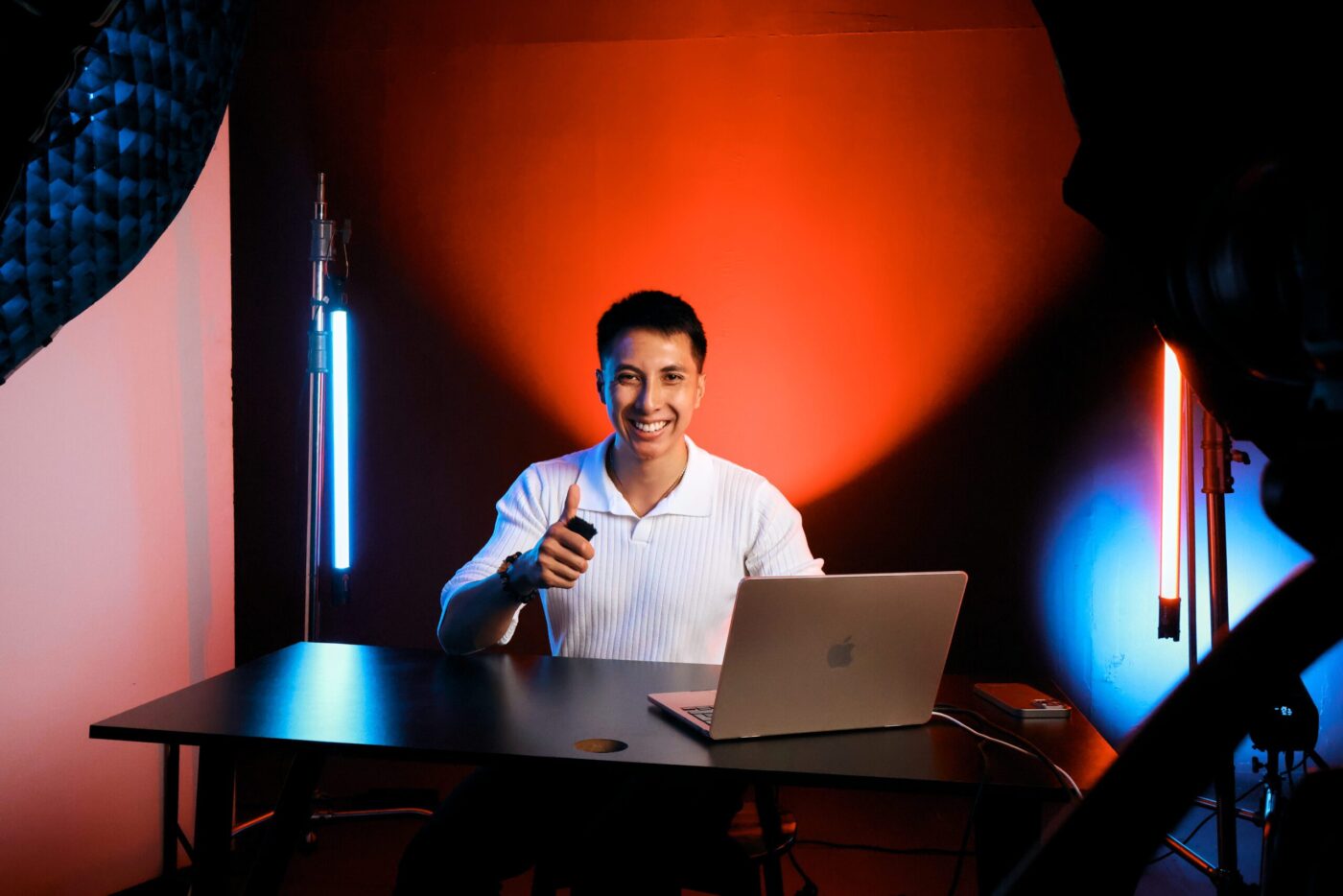
A talking head has one person in frame looking straight down the lens, with no interviewer on screen. An interview also has one person in frame, but their eyes sit off to the side where the host is. A vlog is shot handheld in changing locations. A video podcast has two or more people, one microphone each, usually covered from two or more angles.
These four get used interchangeably in client briefs, and each one implies a completely different layout for microphones, lighting and camera count. The table below is how CINEFY sorts a brief before quoting, so the gear list and the session length are right from the start.
| Format | People in frame | Eyeline | Microphones | Cameras |
|---|---|---|---|---|
| Talking head | 1 | Straight into the lens | 1 lav | 1 to 2 |
| Interview | 1 | Off to the host | 1 lav, boom optional | 1 to 2 |
| Vlog | 1 | Constantly changing | On camera mic | 1, handheld |
| Video podcast | 2 or more | At each other, occasionally to camera | One per person | 2 to 3 |
The part people miss: picking the wrong format breaks the edit, not the shoot. A coach in Da Nang once booked a session described as talking head, then said on arrival that she wanted someone asking questions so she would not freeze. The crew switched to an interview layout on the spot, added a microphone for the host and moved the camera so her eyeline no longer ran down the lens. Shooting it as a talking head while she answered a person sitting beside the camera would have left her looking off frame for the whole video, and no amount of post can fix that.
On microphones for talking head, one wireless lav is enough. DJI lists 32-bit float internal recording and a maximum transmission range of 250 m on the official Mic 2 spec page, checked 28 July 2026. Inside a recording room that 250 m figure means almost nothing; what earns its money is the internal recording sitting inside the transmitter, because if the link drops mid sentence the original file in the microphone is still intact. That is why CINEFY runs internal recording alongside the camera feed on every session, short ones included.
Frequently asked questions
Should I film talking head at home or in a studio?
Home is fine for everyday content if you can control noise and light. A studio makes sense when the video represents your brand or you want to record in bulk in one session, because light, sound and set are all controlled.
How much does a talking head session at CINEFY cost?
Sessions are priced per hour: 2,500,000 VND per hour with one camera, 3,000,000 VND with two, 3,500,000 VND with three; add 500,000 VND per extra camera and 200,000 VND per person from the third speaker, each with their own lav mic. Prices include cinema camera, lenses, audio, lighting, teleprompter, full crew and the studio; VAT 8% is not included and a 50% deposit holds the booking. Rates from CINEFY’s Podcast and Talking-head booking page, July 2026.
Which lens works best for talking head video?
A fast 35mm or 50mm prime gives a tight frame with pleasant background separation. On real shoots CINEFY often uses the Sony GM 24-70 zoom to switch framing quickly without moving the camera.
How long does setup take?
A basic home setup takes 15 to 30 minutes. At CINEFY the talking head and podcast corner is prepped before your booking, so you sit down and start recording.
First time on camera. Will someone help me?
Yes. CINEFY offers a guided session option: someone prompts questions, keeps your talking points on track and helps you sound natural instead of recited. It exists precisely because first-time coaches, founders and expats tend to freeze in the opening minutes.
Want your first talking head session to run smoothly? Book the CINEFY studio and the crew preps camera, lights, mics and a guide to sit alongside you.
Related articles: Studio rental rates in Da Nang · Podcast equipment in Da Nang · Podcast production in Da Nang
Last updated: July 28, 2026
Cùng làm một thước điện ảnh.
★★★★★ 5.0 · 176 đánh giá Google · phản hồi trong 24h