
JOURNAL · 02/08/2026
Osmo Pocket 4 Pro: 16 Stops, Rent It in Da Nang
Two-lens pocket gimbal camera, global release 30/07/2026. Measured dynamic range, the annoying part of shooting log, and the three groups it suits best. Available for daily rental in Da Nang. Rents at 400,000 VND per day (excl. VAT 8%) in Da Nang.

The DJI Osmo Pocket 4 Pro is a two-lens pocket gimbal camera weighing 230 grams, released globally on 30/07/2026. The headline is not the new telephoto but the 1 inch sensor built on LOFIC technology: the CineD lab measured 16 stops of dynamic range, a figure that used to belong to full size cinema bodies. CINEFY rents it by the day.
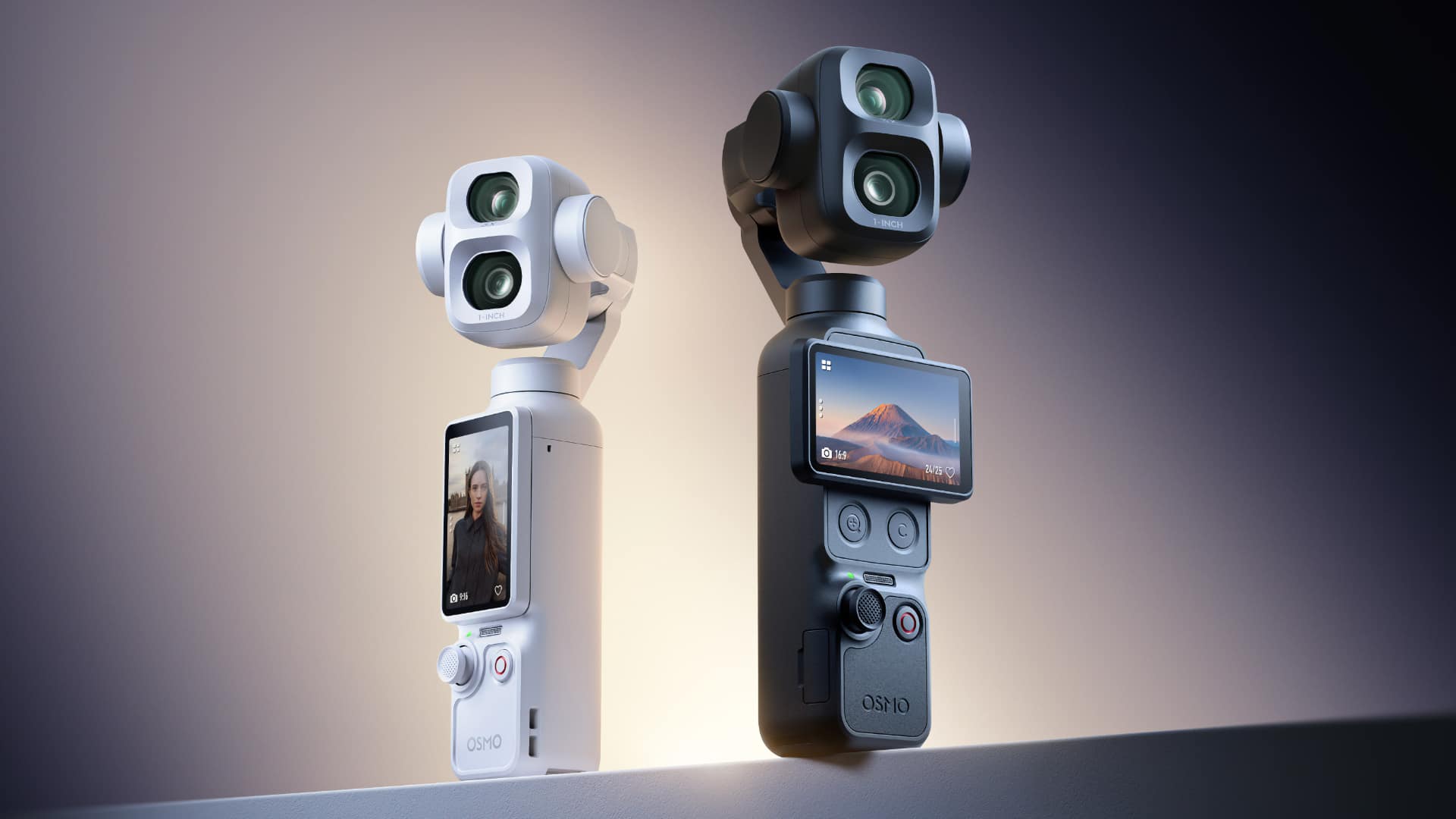
The Pocket line has always been a story about trade-offs. A camera the size of a soft drink can needs a small sensor, and a small sensor blows the clouds out under harsh Da Nang sun and turns grainy inside a dim cafe. Anyone who shoots regularly knows that price and accepts it, because what comes back is compactness.
The 4 Pro changes the terms of that trade, and that is why this one is worth reading before you decide whether to rent or to buy.
What 16 stops actually means for shooting outdoors
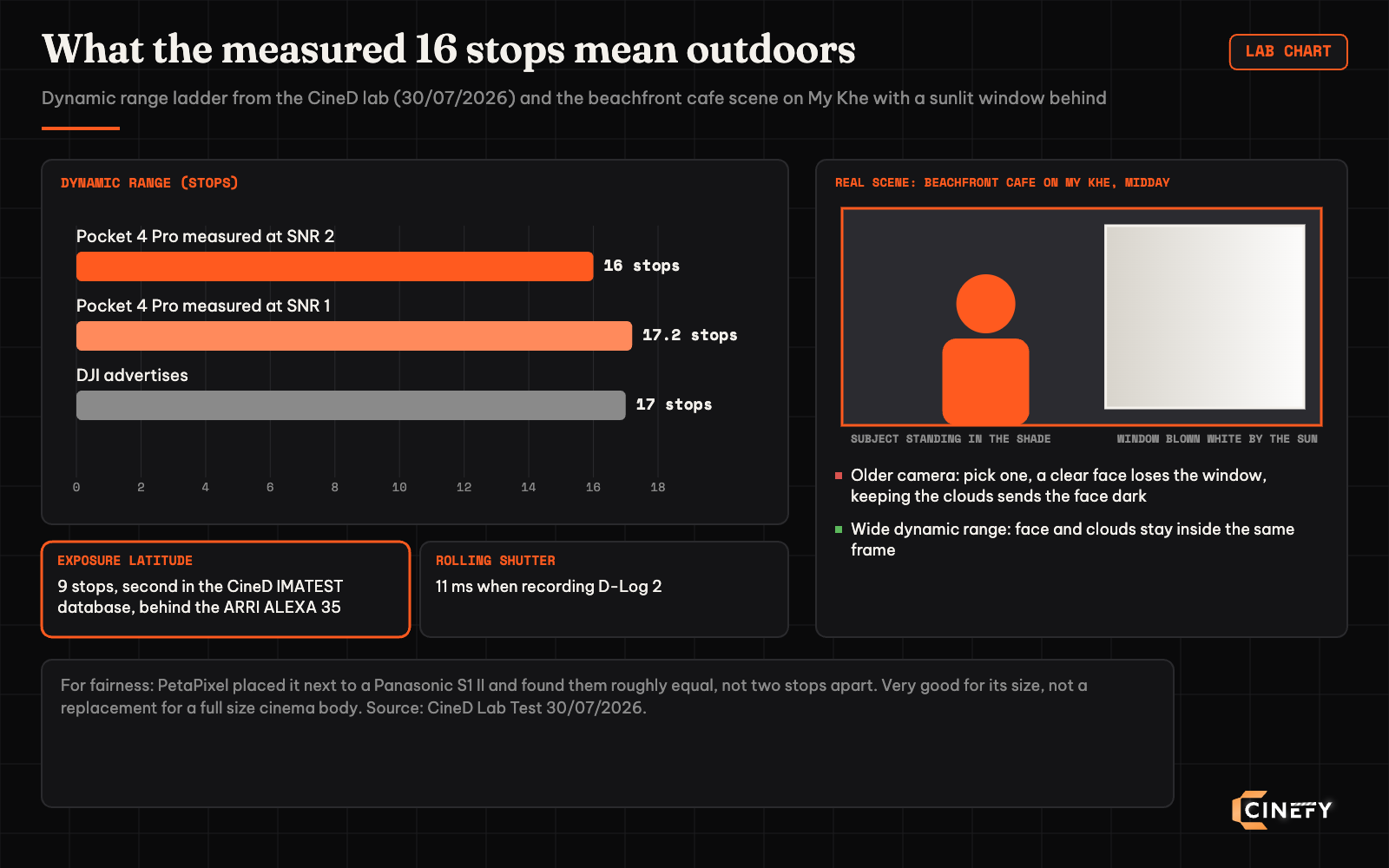
On 30/07/2026 the CineD lab published its measurements of the Pocket 4 Pro: 16 stops of dynamic range at SNR 2 and 17.2 stops at SNR 1, 11ms of rolling shutter when recording D-Log 2, and 9 stops of exposure latitude. That set of numbers puts it at the top of the CineD IMATEST database and second on exposure latitude, behind the ARRI ALEXA 35 (source: CineD Lab Test, 30/07/2026).
Translated into field language: you film someone standing in the shade of a beachfront cafe on My Khe, with a window behind them blown white by midday sun. An older camera forces you to pick one of two outcomes, either a clear face and a lost window, or the clouds outside and a face gone dark. Wide dynamic range means you keep both inside the same frame.
One thing needs saying for fairness: DJI advertises 17 stops, and when PetaPixel placed the camera next to a Panasonic S1 II they found the two roughly equal rather than two stops apart as the number suggests. Put another way, the camera is very good for its size, but do not expect it to replace a full size cinema body.
The 60mm telephoto solves the real problem for vloggers
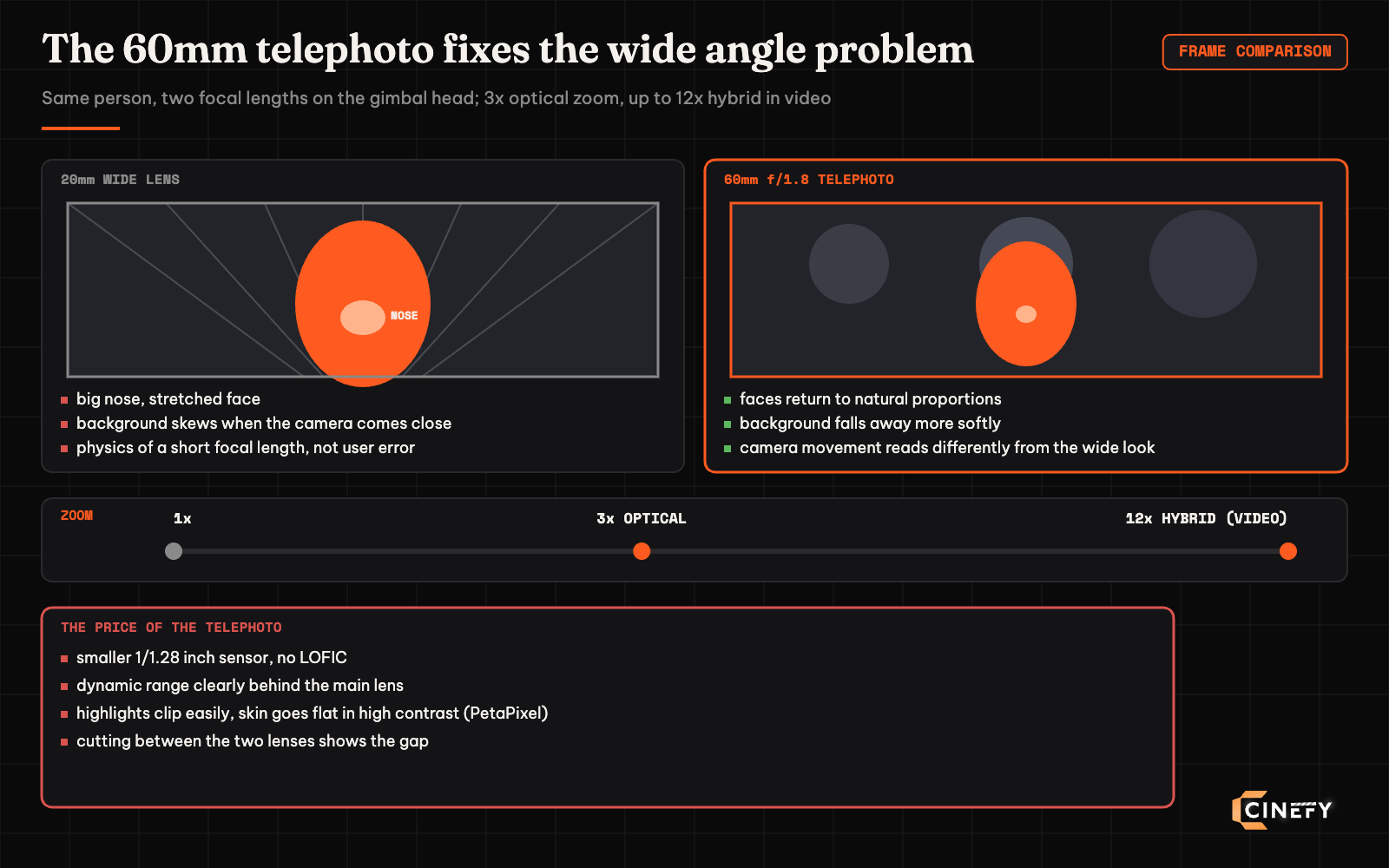
A 20mm wide lens gives every selfie video the same uncomfortable signature: a big nose, a stretched face, a background that skews the moment you bring the camera close. That is the physics of a short focal length, not a mistake by the person holding it.
The 60mm f/1.8 telephoto on the Pro fixes exactly that. Faces return to natural proportions, backgrounds fall away more softly, and camera movement reads very differently from the familiar wide look of pocket gimbals. Optical zoom is 3x, pushing to 12x hybrid in video.
But the telephoto sits on a smaller 1/1.28 inch sensor with no LOFIC, so its dynamic range is clearly behind the main lens. PetaPixel noted highlights clipping easily and skin tones occasionally going flat in high contrast. If your edit cuts back and forth between the two lenses, that gap is visible.
What the launch coverage skips: changing lens in log is a chore
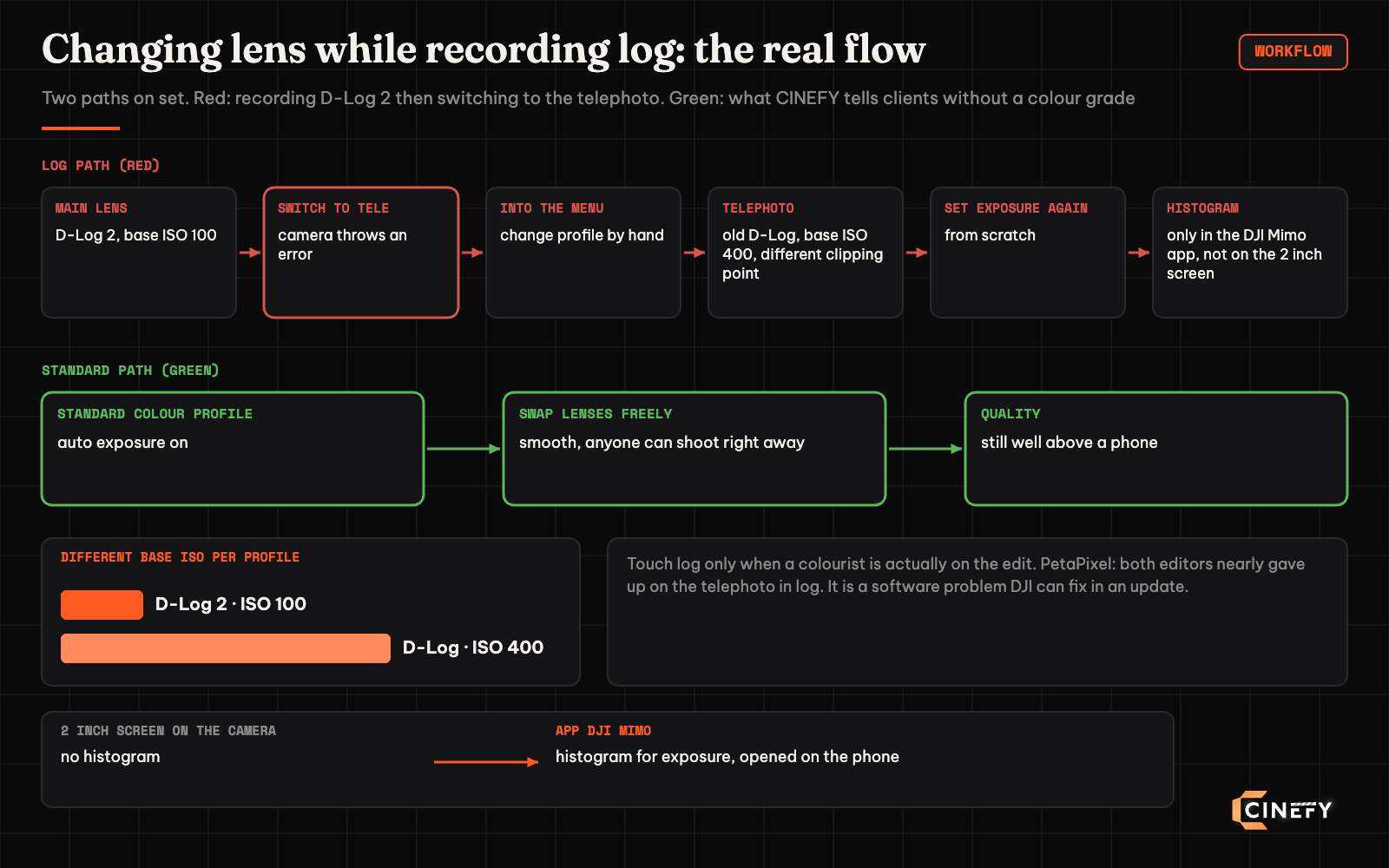
This is the part we think matters most to rental clients, because it hits working speed on set directly.
The main lens uses the new D-Log 2 profile. The telephoto does not support it and only runs the older D-Log. If you are recording D-Log 2 and want to switch to the telephoto, the camera throws an error and sends you into the menu to change profile by hand. Worse, the two profiles have different base ISO values, 100 and 400, and different clipping points, so after switching you set exposure again from scratch. And to read a histogram properly you need the DJI Mimo app on your phone, because the 2 inch screen on the body has no such tool.
Both PetaPixel editors said plainly that they ended up abandoning the telephoto when shooting log, because the workflow was too fussy. The good news is that this is a software problem, and DJI can fix it in a firmware update.
What we tell clients when we hand the camera over: if your shoot has no serious grading stage, leave the camera on a standard colour profile with auto enabled. In that mode it runs beautifully, anyone can pick it up and shoot, and the quality is still well clear of a phone. Only touch log when you genuinely have an editor who can grade.
Specifications worth knowing before you take it out
- Main lens: 20mm equivalent, f/2.0, 1 inch stacked sensor with LOFIC, D-Log 2 in 10-bit colour.
- Telephoto: 60mm equivalent, f/1.8, 1/1.28 inch sensor, D-Log only.
- Slow motion: 4K at 240 frames per second on the main lens, 200 frames on the telephoto. Note that slow motion modes cannot record log.
- Internal storage of 103GB plus a microSD slot. A full day of travel filming without swapping cards halfway through.
- Battery of 1,545mAh, 210 minutes claimed by DJI, 80 percent charge in 18 minutes.
- Weight 230 grams, mechanical 3-axis stabilisation, Smart Follow 8.0 subject tracking.
- Three built-in microphones, with two wireless mics connecting directly and no separate receiver needed.
Who in Da Nang should rent this camera
Three groups we find it suits best:
Content and social teams who need footage that cuts with a larger camera. Wide dynamic range plus D-Log 2 means Pocket 4 Pro footage sits on a shared timeline with cinema camera material without standing out. This is where the camera separates itself most clearly from a phone.
Shooters who need angles a big camera cannot reach. Running handheld behind a subject through a Son Tra alley, mounted on a motorbike, threading through the crowd at Han Market. A 230 gram body does things that a full gimbal rig needs 20 minutes of assembly to attempt.
Anyone who needs high quality slow motion. 4K at 240 frames per second in a pocket body is rare. Waves breaking, hair moving, water splashing: slowed down, these turn into usable reel material immediately.
And if you shoot alone and want to be in front of the camera while operating it, there is another option worth weighing, which we cover in detail in our comparison of the two cameras.
Frequently asked questions about the DJI Osmo Pocket 4 Pro
How much does it cost to rent an Osmo Pocket 4 Pro in Da Nang?
It is 400,000 VND per day (taken from the CINEFY equipment rental page, checked on 23 September 2026, excluding VAT 8%) at CINEFY. Consecutive multi-day rentals come at a better rate, so message us with your dates and we will quote against your schedule.
Is it sold officially in Vietnam?
Yes, official dealers in Vietnam began taking orders in late July 2026. DJI does not distribute this model in the United States market.
Can someone who has never filmed before use it?
Yes. Leave it in auto with a standard colour profile and all you do is press record. The complications described above only appear when you shoot log for serious grading.
Does it overheat under the Da Nang sun?
At normal resolutions and frame rates it runs steadily. Filming continuously in high frame rate modes calls for breaks, the same as every other small camera.
Do I need to rent anything alongside it?
If you are filming outdoors with wind noise, add a wireless mic. For a full day, add a spare battery and a memory card. We stock all three.
Rent the Osmo Pocket 4 Pro in Da Nang
400,000 VND per day. Wireless DJI Mic units, memory cards and spare batteries can be added so a full day of filming never stops for a flat battery.
Read more
- Osmo Pocket 4 Pro or Luna Ultra: choose by the shoot
- Insta360 Luna Ultra: the detachable screen for solo shooters
- Film equipment rental in Da Nang
- Camera equipment rental in Da Nang 2026: the full guide
- Video production services in Da Nang
Data sources: CineD Lab Test (30/07/2026), PetaPixel review (30/07/2026), official DJI specifications, Vietnamese dealer list prices for August 2026. Illustration image released by the manufacturer.
Let’s make something cinematic.
★★★★★ 5.0 · 183 Google reviews · replies within 24h