JOURNAL · 07/08/2026
Podcast Production Process in a Da Nang Studio
What actually happens on a studio podcast shoot, from booking to file handover? CINEFY walks through the process it runs in Da Nang.

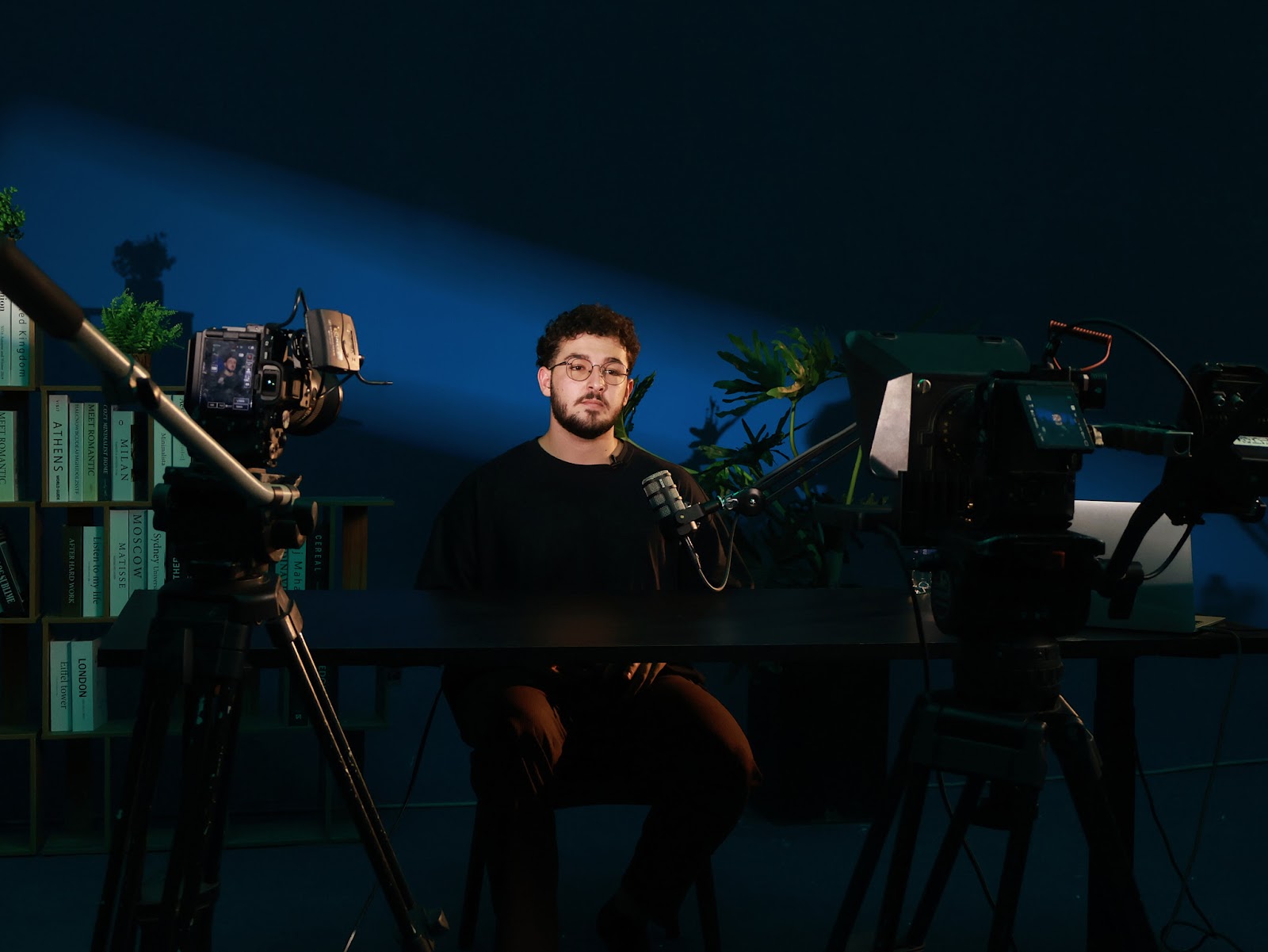
The most common question from a first time booking is not the price. It is “what actually happens once I walk in”. This article lays out the working order our crew follows at the CINEFY studio in An Hai, Son Tra, so anyone about to record a first episode knows what they are walking into.
What are the stages of a podcast shoot?
The shoot splits into four stages, and three of them happen before anything is recorded. That surprises most people: the talking usually takes less time than the building and checking around it.
| Stage | When | What happens |
|---|---|---|
| Booking and content | Before the shoot | Lock the hours, choose the camera count, send a script or question outline, agree wardrobe and set look |
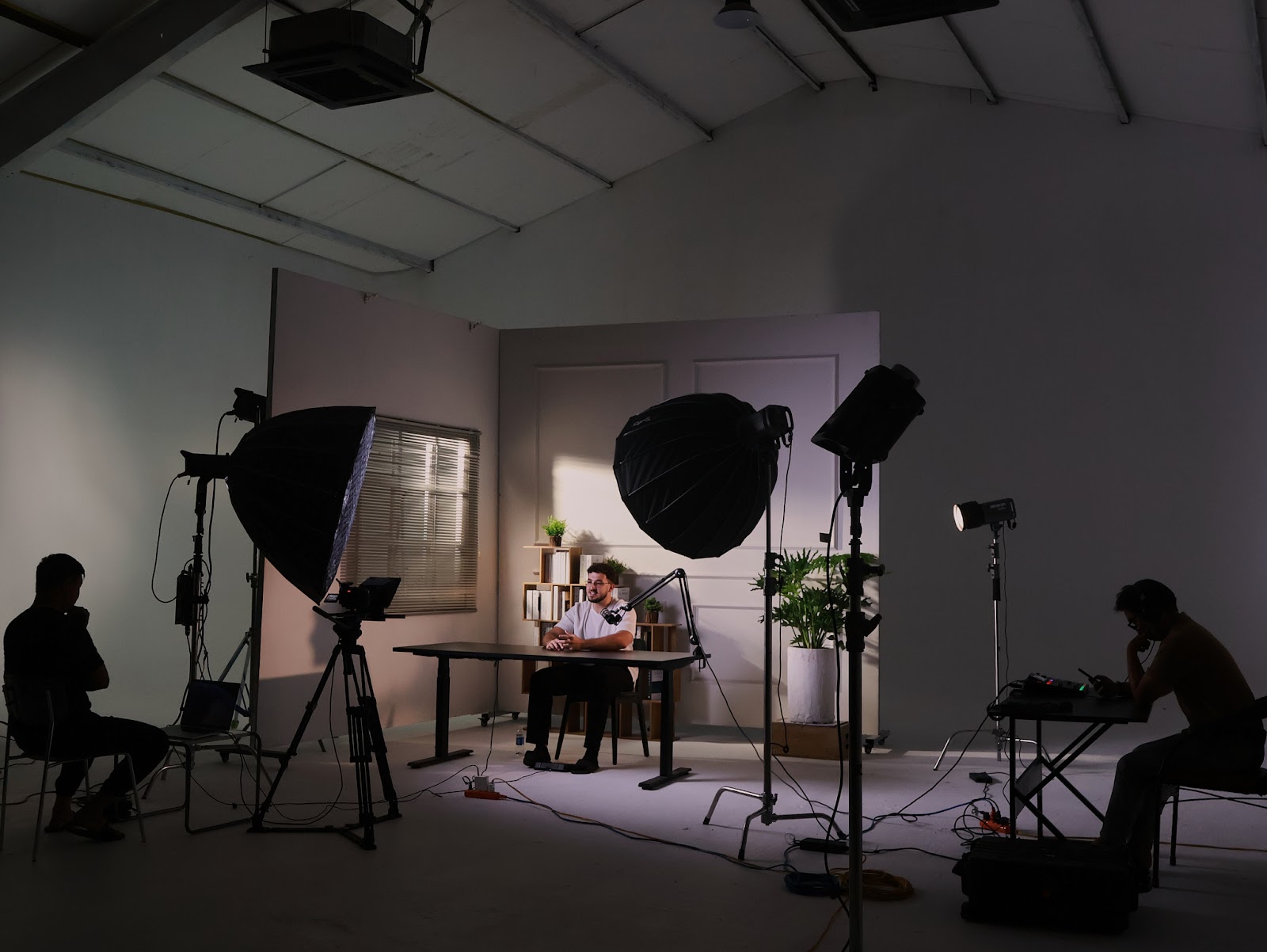
| Set and lighting build | Before recording starts | Place furniture, set lights, hang the backdrop, mount cameras, frame every angle |
| Test record and shoot | Inside your booked hours | Fit the microphones, record a short test, listen back, then roll for real |
| Handover | After the shoot | Back up the raw files, hand the data to the client, edit if that was booked |
The clock runs on recording time, not build time. The crew comes in early so the set is ready the moment you arrive.
What do you need to lock before the shoot day?
Three things: the camera count, what will be said, and who sits in frame. Those three decide almost everything else about the day.
Script or outline
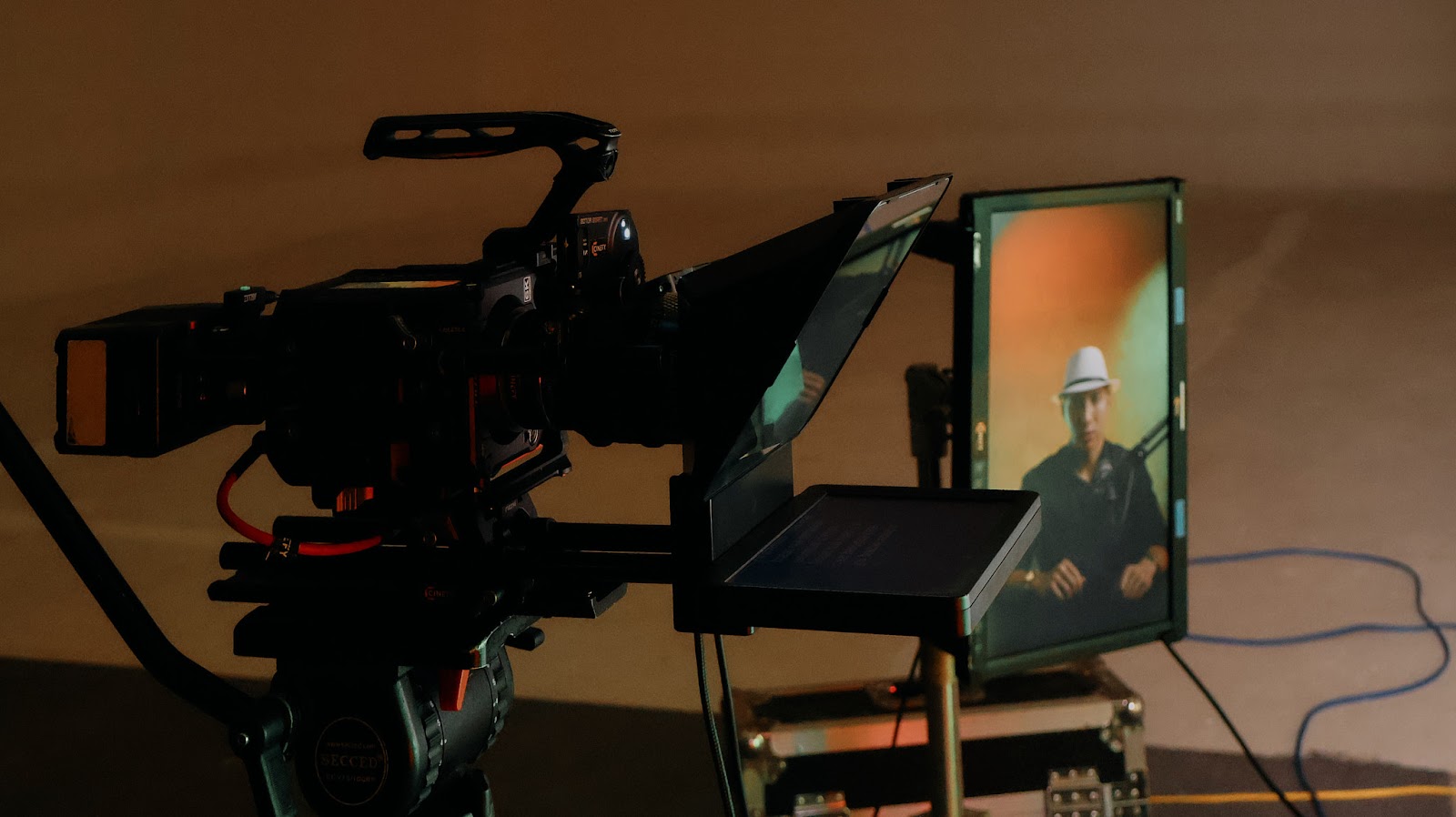
Interview formats only need a question outline. Presentation formats, a product explainer or a lesson, are worth scripting so the text can be loaded into the teleprompter. The prompter sits directly in front of the lens, so the speaker still looks straight down the barrel while reading. That is the difference between one clean take and a fifth attempt.
People who have never sat in front of a camera
Most CINEFY clients are not professional presenters. They are founders, coaches and expats living in Da Nang, and plenty of them freeze the second the record light comes on. For that group we offer a guided session: someone sits in with you, asks the questions and keeps the rhythm, until you forget the camera is there. If that sounds like you, say so when booking, because both the set build and the questioning change.
Set and weather
The set is built indoors, so the schedule does not depend on the sky. Da Nang summers are harsh and the rainy season is long; shooting outside means the light shifts every time the weather does, halfway through a session. Inside the studio, nine in the morning and three in the afternoon look identical, so an episode shot today cuts together with one shot next month without a tonal jump.
How does the crew build the set and capture audio?
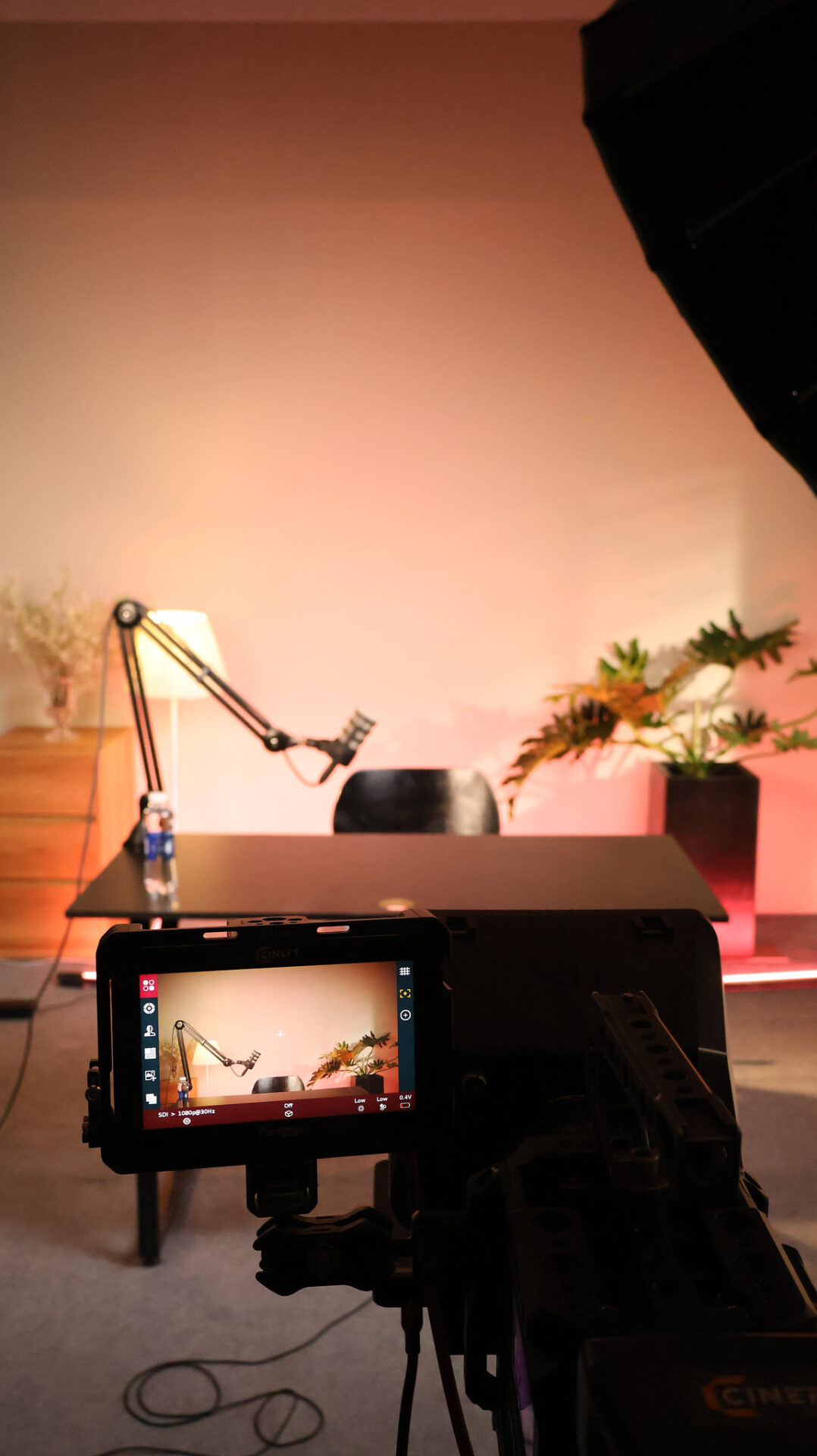
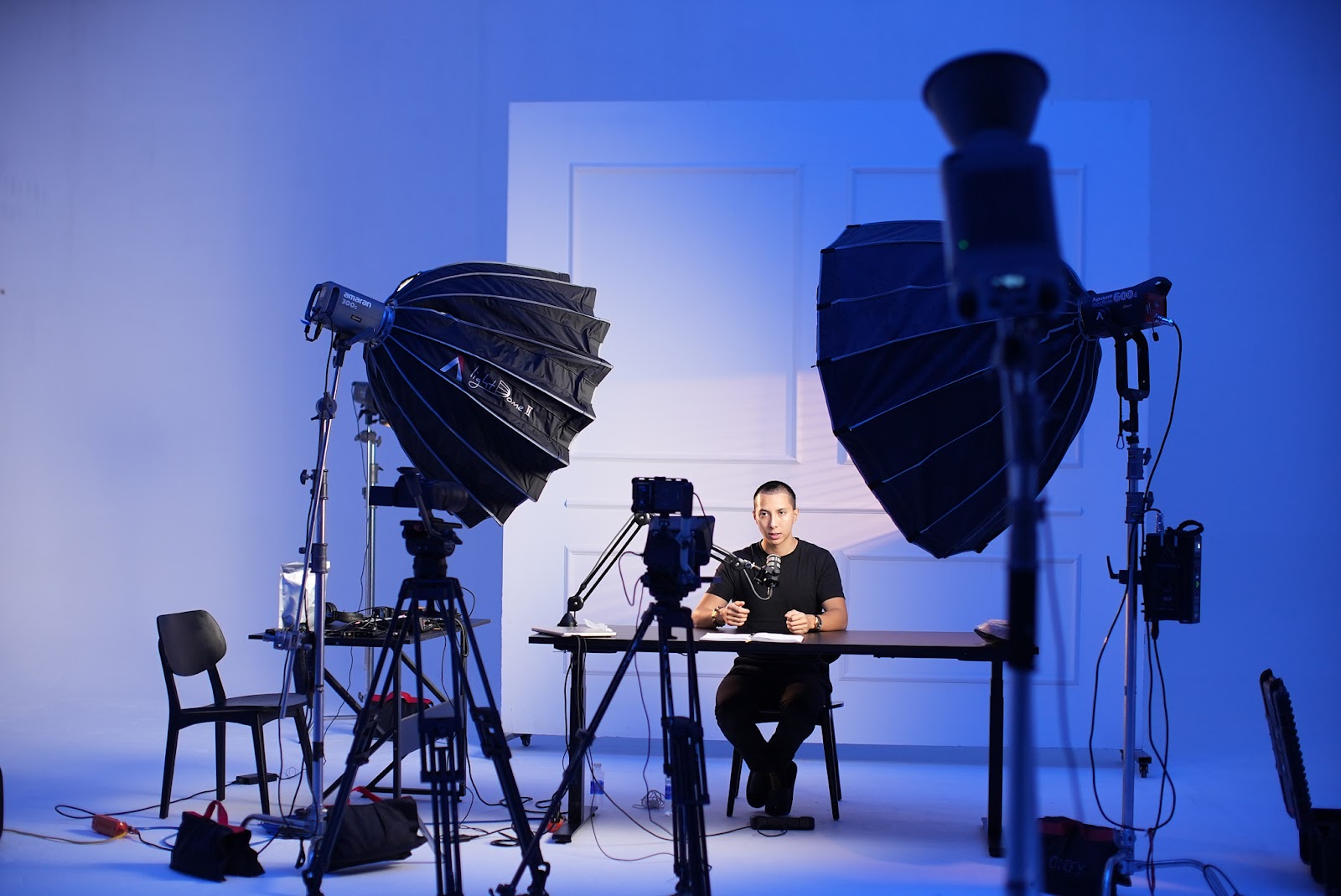
The build order is lighting first, cameras second, microphones last. The reasoning is simple: you only know where to put a camera once the light is placed, and you only know where to hide a microphone once the camera is framed.
Cameras
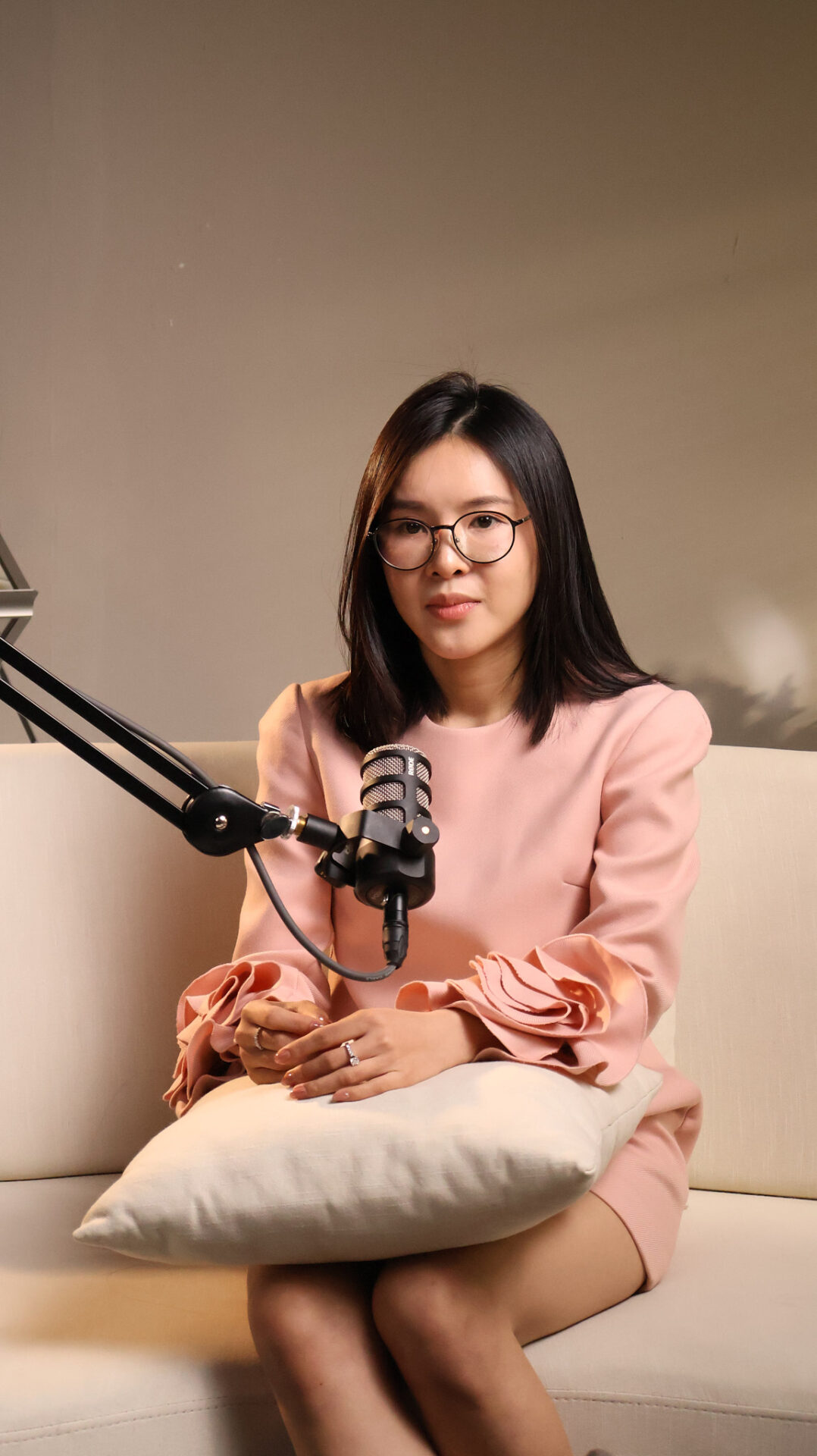
Podcast work leans on the Sony bodies, usually a Sony FX3, FX30 or A7 V paired with Sony G Master glass. That is not about the badge on the camera. It is that these files are meaningfully lighter than the heavier acquisition formats. A ninety minute session on three bodies is already a lot of data, and every gigabyte saved at the shoot is time saved in backup, editing and long term storage.
Audio
Every speaker gets their own microphone, lavalier or boom depending on the set, using bodies like the DJI Mic 2 or the Sennheiser MKH416. The part that matters is elsewhere: each microphone records to its own separate track, never a single mixed one. In any given session, one person taps a finger on the table while thinking, or drags a chair, and that noise is now in the recording. Separate tracks let post treat only that track without touching anyone else’s voice. Mix it down at the source and the noise is in the episode permanently.
The test record
Before the real take, the crew always records a short pass and plays it back on speakers. It is the cheapest step of the day and the one that saves the most sessions. A slipping lav, a noisy air conditioner, a light with a buzz, a phone left on vibrate in a jacket pocket: all of it shows up in thirty seconds of listening back, and none of it can be fixed after the client has gone home.
What changes with one, two or three cameras?
The camera count sets your editing rhythm, not your image quality. One camera gives one angle, so every cut is visible. Two or more lets the edit cut between angles, and the viewer never notices anything was removed.
| Setup | Per hour | Best for |
|---|---|---|
| 1 camera | 2,500,000 VND | A single speaker, presentation formats, straight through with few cuts |
| 2 cameras | 3,000,000 VND | Two person interviews that need to cut between question and answer |
| 3 cameras | 3,500,000 VND | Roundtables with several guests, plus a wide angle for editing freedom |
| 4 or more | Quoted on request | Custom setups and purpose built sets |
Rates taken from the CINEFY podcast booking page, checked 07/08/2026. They include the cinema camera and lens, broadcast audio, lighting, teleprompter, the crew and the studio. VAT of 8% is not included, hours between 22:00 and 08:00 carry a surcharge of 180,000 VND per hour, and a 50% deposit holds the date. Package details sit on the podcast and talking head service page, and the podcast studio rates guide works through real sessions.
Practical advice: start at two cameras. One camera looks like the saving, but when the edit needs to drop a stumbled sentence there is no second angle to hide the cut behind, and the only remaining option is leaving the stumble in the episode.
What files do you get afterwards?
You receive every camera original and the separate audio tracks, plus the edit if editing was booked. The raw files belong to the client and are never held back as leverage.
Our storage rule is to keep an uncompressed master and export a separate compressed version for each destination. Every platform asks for something slightly different, and compressing twice is visible.
According to the Video specs documentation from Spotify for Creators, checked 07/08/2026, the published file should be an MP4 container, encoded H.264 or H.265, at 1080p or higher, in 16:9, at roughly 25 Mbit per second for a 1080p source, with AAC-LC audio at 128 kbps or higher in stereo. Spotify is also explicit about two things that quietly break a finished edit: the audio and video tracks must be the same duration, and edit lists are not supported. Neither shows up while reviewing on the edit machine. Both show up when the upload is rejected.
One more worth remembering: Spotify accepts any aspect ratio, but anything other than 16:9 gets letterboxed or pillarboxed to fit. So cut the vertical version separately for social, and do not publish that same vertical file as the episode.
How much content comes out of one session?
A ninety minute session rarely produces just one episode. The efficient approach is to record several topics inside a single set build, because the build and the checks are the expensive part. Talking for another thirty minutes costs almost nothing on top.
From one session, clients typically walk away with the full episode, short cuts pulled per question for social, and an audio only version for the listening platforms. All three come from one set build and one crew day.
If you have never recorded an episode, read how to start a podcast in Da Nang before booking. If you would rather build a set at your own space, see podcast equipment rental in Da Nang. If you only need one person speaking to camera, the talking head setup guide is closer to the mark, and the full service sits on podcast production in Da Nang.
Frequently asked questions
How long does a podcast shoot take?
Most sessions at CINEFY run about ninety minutes from the moment recording starts. The crew arrives beforehand to build the set, so build time is not charged against your booked hours.
Can we shoot without a script?
Yes. Interview formats only need a question outline. Presentation formats are worth scripting so the text can go into the teleprompter, because reading from a prompter produces a much tighter recording than speaking off the cuff.
How many cameras should a first episode use?
Two is the sensible starting point. With two angles the edit can drop a stumbled line without the viewer noticing, whereas on a single camera every cut is visible.
How soon do we get the files?
Camera originals and the separate audio tracks are backed up during the session and handed over to the client. If editing was booked, the delivery date is agreed against the actual scope when we take the brief.
Should we prepare wardrobe and makeup?
Avoid fine stripes and large logos. The studio has a makeup room and a lounge on site, so guests can arrive early and get ready without going anywhere else.
Planning a first episode and want to know how your session would actually run?
Let’s make something cinematic.
★★★★★ 5.0 · 183 Google reviews · replies within 24h