
JOURNAL · 05/06/2026
Audio for Video: Why Bad Sound Kills Good Footage (2026)
Audio for video production: why viewers forgive bad image before bad sound, 3 mic types, field recording rules, post workflow and audio gear rental in Da Nang.

Viewers will forgive slightly underexposed footage, but they will not forgive crackling audio, echo or wind noise. This guide is for anyone who wants to upgrade their sound and does not know where to start.
Try an experiment: watch a gorgeous 4K video with crackling, echoey audio and background noise. Then watch a plain 1080p video where the voice is clear, clean, with well-chosen background music. Which one will you watch to the end?
The answer is almost always the second one. This is not personal opinion: research from video platforms shows audiences forgive poor image quality far more easily than poor sound.
Why is audio so often neglected?
The invisible factor that decides video quality
The reason is simple: audio is invisible. When you buy a new camera, you see better images instantly. When you buy a new microphone, the difference is subtler; you have to listen closely to notice. On top of that, the built-in camera mic sounds acceptable in a quiet room, so many people assume no further investment is needed.
But shoot in real-world conditions, with traffic outside, air conditioning, echo in a large room, and the built-in mic falls apart. That is when you need to understand professional sound recording.
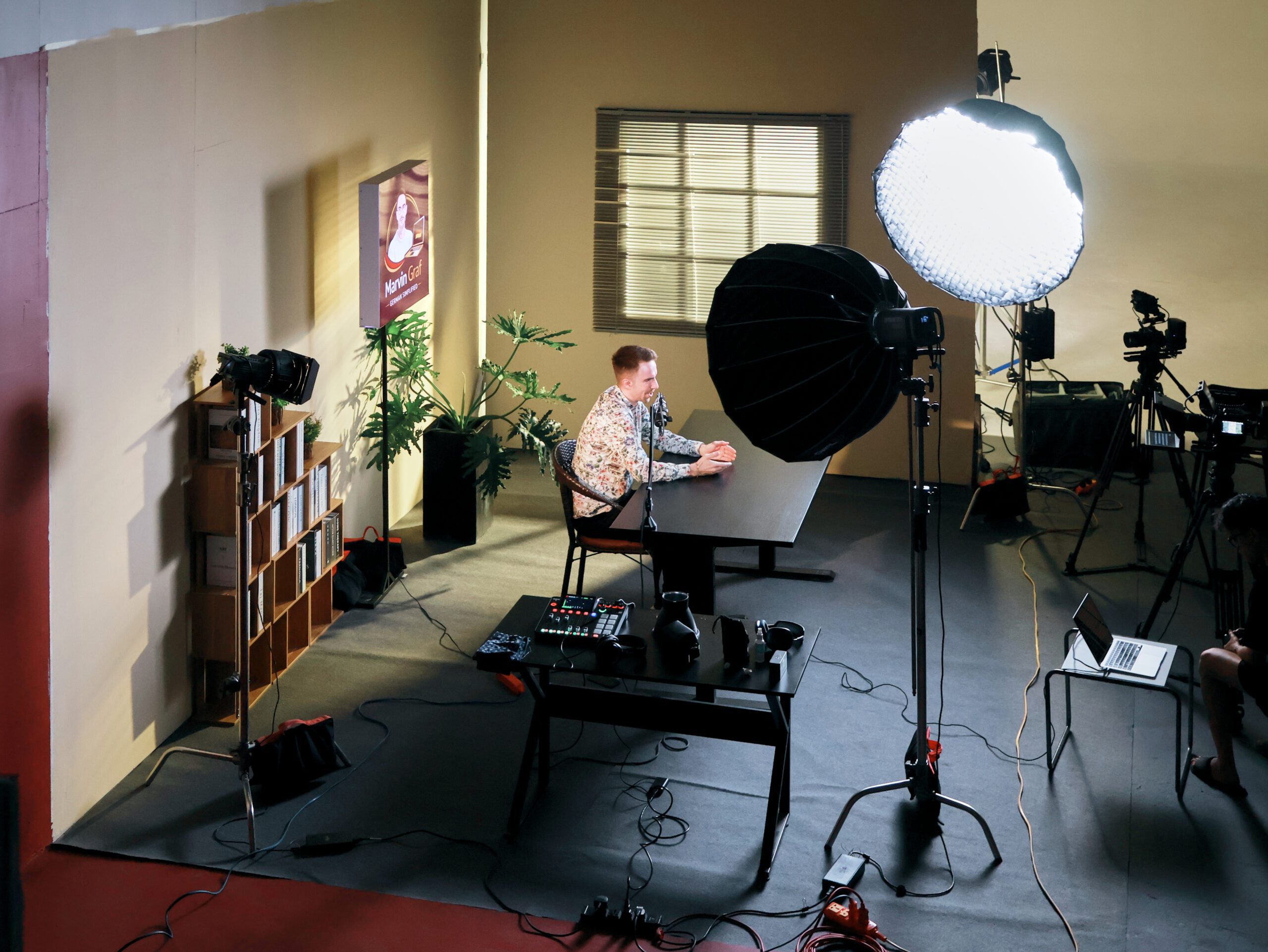
The 3 most common microphone types in filmmaking
Each has its strengths and weaknesses: pick the right type for the right situation
Shotgun Mic
Narrow pickup pattern that rejects noise from the sides. Mounted on a boom pole or the camera hot shoe.
Pros: Best quality, flexible
Cons: Needs a boom operator, picks up sound in front
Use for: Interviews, narrative, film
Lavalier (Lav)
Clip-on mic with a wireless link. Sits close to the mouth, so speech stays clear even in noisy environments.
Pros: Freedom of movement, invisible in frame
Cons: Clothing rustle, lower quality than shotgun
Use for: Vlogs, walk & talk, presentations
Handheld / Reporter
Reporter-style handheld mic. Simple, rugged, looks professional on camera.
Pros: Easy to use, durable, low handling noise
Cons: Visible in frame, limits movement
Use for: Man-on-street, events, press

Field recording principles
The rules that get you clean audio straight from set
Get the mic as close to the mouth as possible
Sound falls off with distance following the inverse square law. Double the distance and the signal is 4 times quieter while picking up more noise.
Always monitor with headphones
The most common mistake: discovering broken audio after the shoot. Closed-back headphones, plugged directly into the recorder or camera, monitoring in real time.
Set levels right: -12dB to -6dB
Too low means noise when you boost it. Too hot means clipping (distortion that cannot be fixed). Peaks at -6dB, normal speech around -12dB.
Record room tone
Before rolling, stop for 30 seconds and record the empty room. Your editor will thank you for having it to fill gaps in the edit.
Pro tip: Before shooting, pause for 30 seconds and just listen. You will notice noise sources you never paid attention to. Switch off everything that can be switched off (AC, fans, TV, fridge).
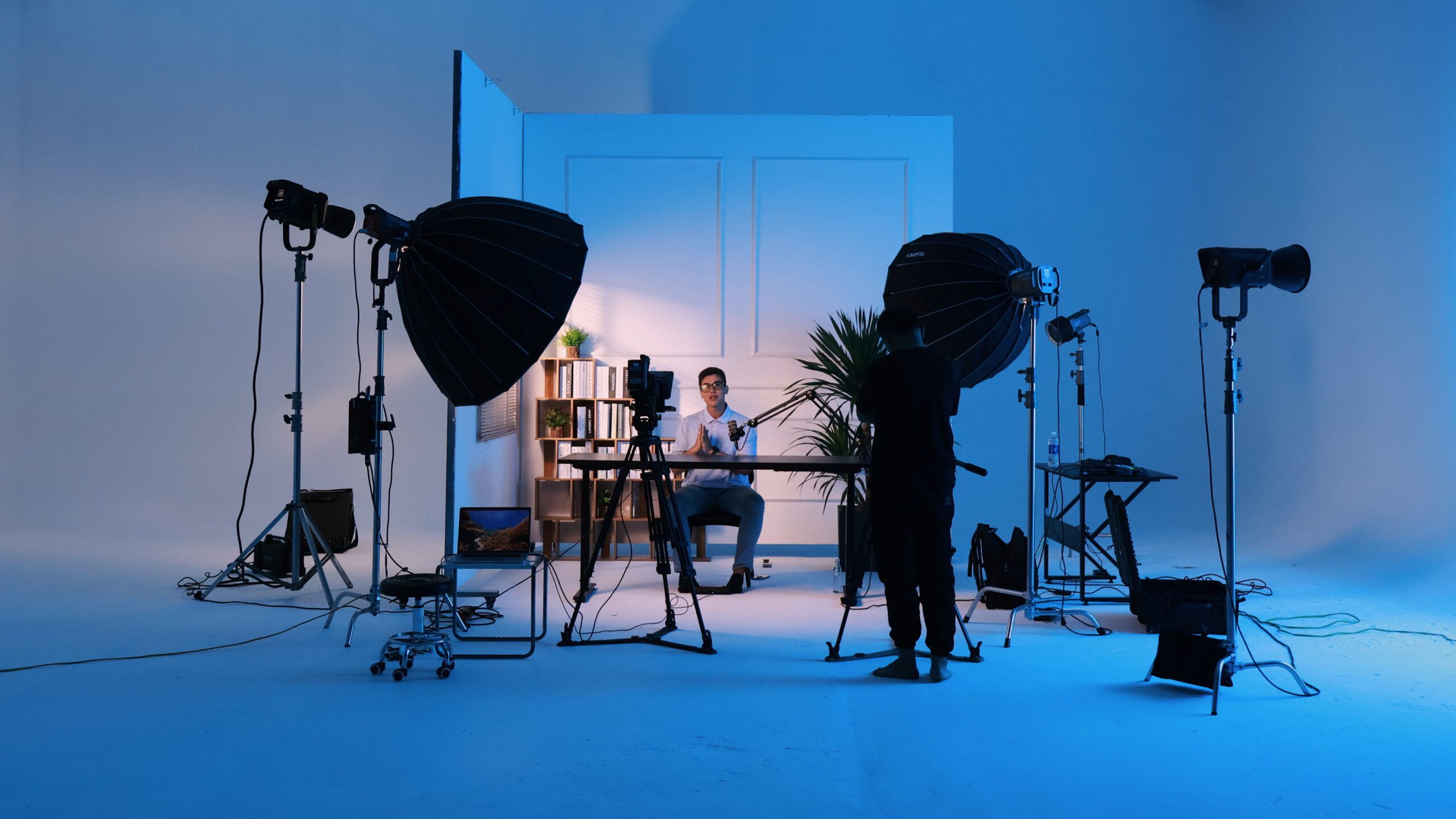
Need a sound kit for your next shoot?
CINEFY rents mics, recorders and a sound engineer by the session, recording in the 360 m² studio or on location.
Which mic for which situation?
A quick reference table by shooting scenario
Post-production audio
You recorded it well. Now what?
Noise reduction
Use a noise profile from your room tone to remove background noise. Adobe Audition, iZotope RX or DaVinci Fairlight all do this well.
EQ & compression
EQ makes speech clearer (boost 2-4kHz for presence, cut below 80Hz to remove rumble). Compression keeps the volume even.
Music & sound effects
Music must support the content, never drown the voice. Rule of thumb: dialogue at -6dB, music bed at -18dB to -24dB.
Loudness standards
YouTube: -14 LUFS. Facebook/Instagram: -16 LUFS. Broadcast: -24 LUFS. Exporting to spec keeps platforms from crushing your audio.
Good audio does not require expensive gear; it requires the right knowledge and discipline on set. An entry-level wireless mic kit in experienced hands beats a package ten times the price in inexperienced ones.
Need advice on audio gear for your shoot?
CINEFY rents sound kits by the day: Sennheiser MKH 416 with boom pole and blimp, wireless lavs (Sennheiser G3/G4 or DJI Mic 2), and a Zoom F6 or Zoom H6 recorder, with a sound recordist if you need one.

Frequently asked questions
Common questions about recording sound for video
What is the best microphone for beginner filmmakers?
For beginners, a wireless lavalier system (such as the DJI Mic 2 or Rode Wireless GO II) is the best choice. Easy to use, quick to pair, and consistent across many shooting situations. A day of rental at CINEFY: DJI Mic 2 350,000 VND, at the rates in the 24 August 2026 price list, before 8% VAT.
How much does a basic recording kit cost?
A basic filmmaking sound kit is three items: one wireless lav mic, one pair of closed-back monitoring headphones, and a spare cable. Under ten shoot days a year, renting costs less than buying: a day at CINEFY is 350,000 VND for a DJI Mic 2, 400,000 VND for a Sennheiser G3/G4, and 200,000 VND for a Zoom H4n Pro recorder, at the rates in the 24 August 2026 price list, before 8% VAT.
Should I use the camera’s built-in mic?
Built-in mics are only suitable for ambient sound or reference audio. The quality is not enough for professional production because they pick up too much surrounding noise. Always use an external mic for any project that needs clear audio.
Where can I rent professional audio equipment in Da Nang?
CINEFY rents audio gear in Da Nang by the day, at the rates in the 24 August 2026 price list, before 8% VAT: Sennheiser MKH 416 with boom pole and blimp 1,000,000 VND (mic body alone 500,000 VND), wireless lav Sennheiser G3/G4 400,000 VND, DJI Mic 2 350,000 VND, Zoom F6 recorder 800,000 VND, Zoom H6 400,000 VND, Zoom H4n Pro 200,000 VND. A sound recordist can come with the kit.
What is the difference between a shotgun mic and a lavalier?
A shotgun mic records a narrow field in front, has the highest quality, and needs a boom operator. A lavalier is a small clip-on mic with a wireless link that lets the speaker move freely. Shotgun for film and professional interviews, lavalier for vlogs, events and presentations.
Related articles
READY TO ROLL?
Contact CINEFY today
From idea to final delivery: CINEFY covers cameras, lighting, sound, crew and studio under one roof.
hello@cinefy.com.vn • (+84) 77 977 1234
For the recording format itself, see does 32-bit float replace a separate recorder, with a signal path diagram and real recorder rates in Da Nang.
Let’s make something cinematic.
★★★★★ 5.0 · 183 Google reviews · replies within 24h